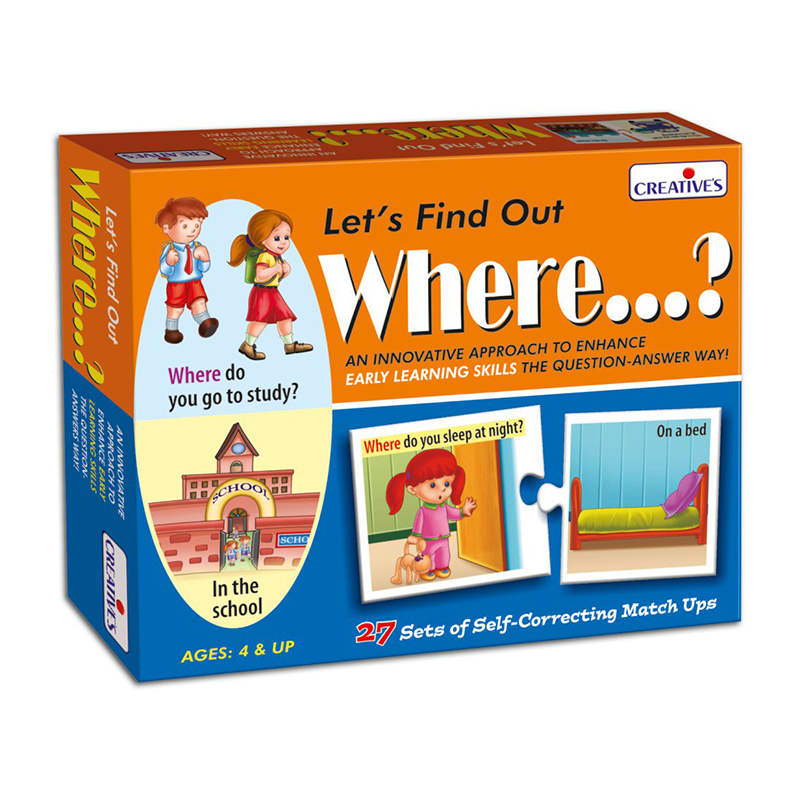
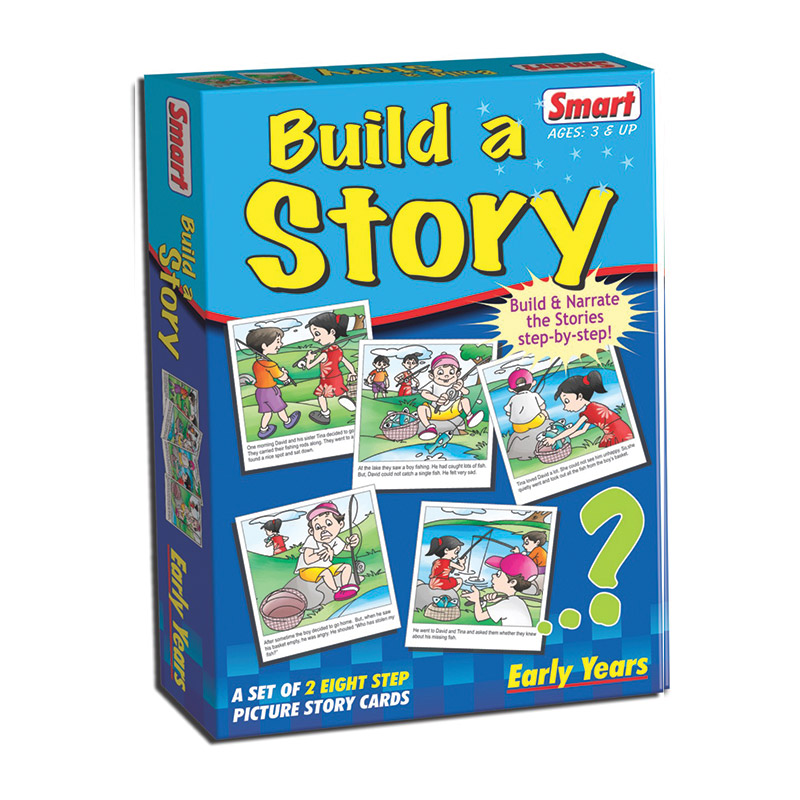
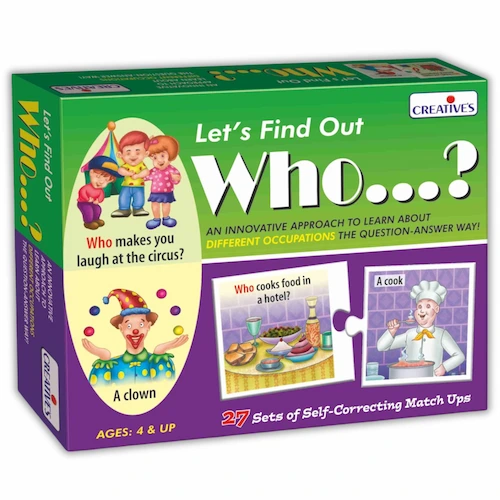
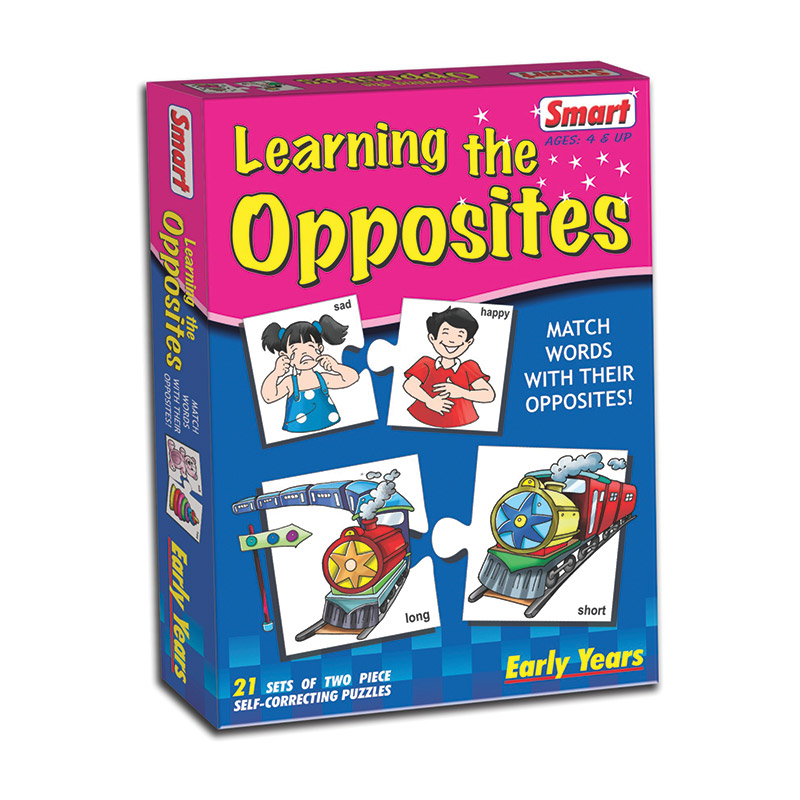
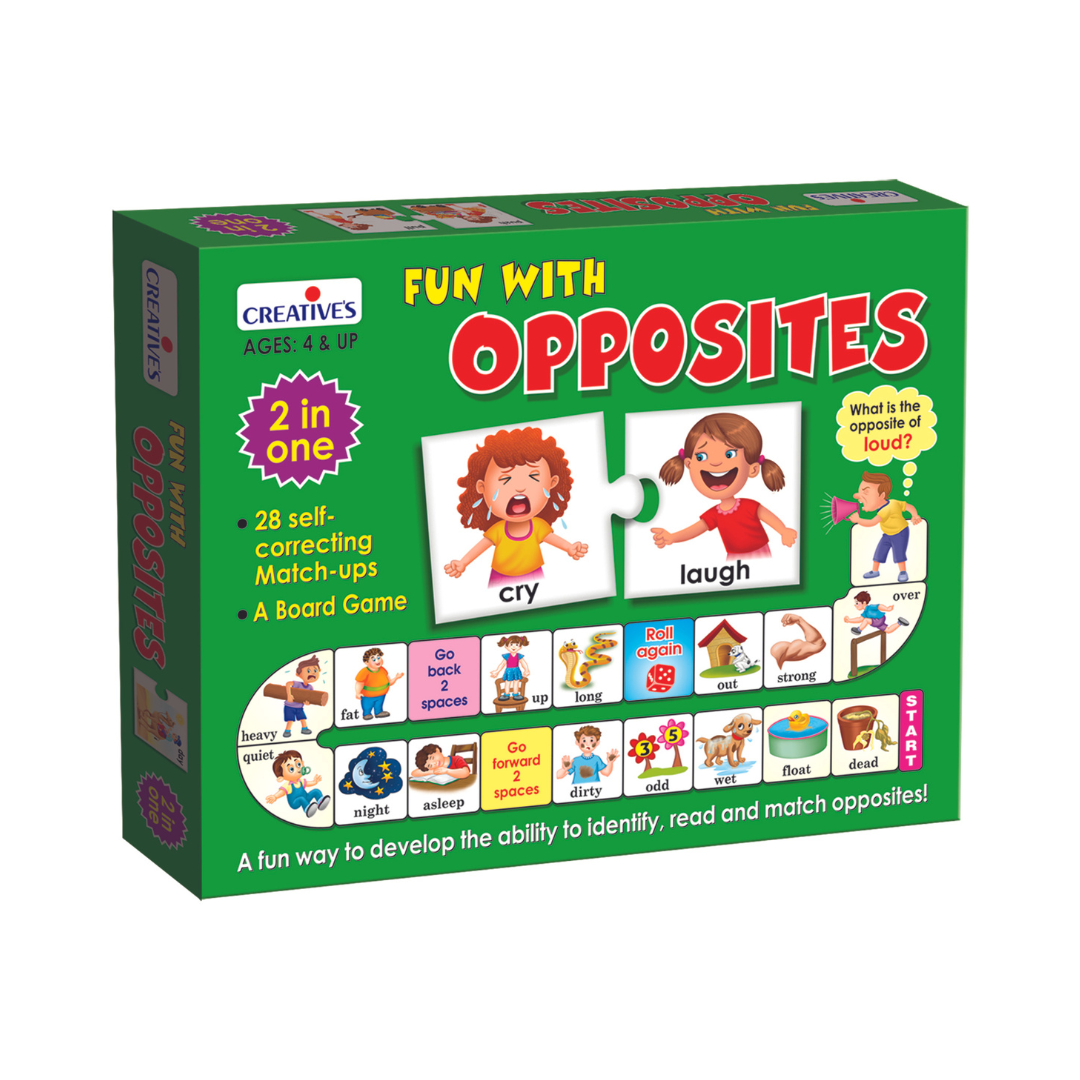
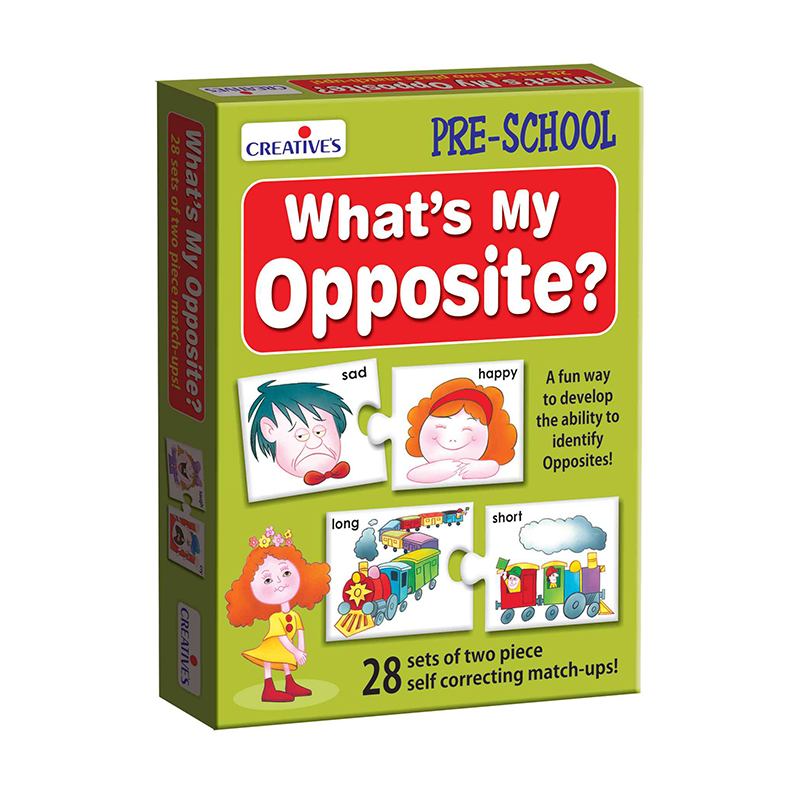
DescriptionCreative’s What’s My Opposite? is a fun and engaging preschool learning game designed to help children understand the concept of opposite words through hands-on puzzle play.The set includes 28 self-correcting two-piece puzzle match-ups, each featuring colorful illustrations that represent opposite ideas such as happy–sad, long–short, laugh–cry and more. Children observe the pictures, think about the concept and connect the correct opposite pairs.The self-correcting puzzle design ensures that only the correct pieces fit together, encouraging independent learning and helping children build confidence while playing.As children match the puzzles, they naturally develop vocabulary, visual discrimination, logical thinking and observation skills. These foundational abilities are important for early language development and school readiness.The activity guide included in the set also suggests ways parents and teachers can gradually increase the difficulty level to keep children engaged as their skills grow.Creative’s screen-free educational toys encourage children to learn through play. This activity is suitable for home learning, preschool classrooms and structured learning environments, including therapy-friendly play spaces where visual learning and hands-on interaction help children improve focus, communication and cognitive development.PRODUCT FEATURESAge Group 4 years and aboveNumber of Players 1 or more playersEducational Skills DevelopedObservation skillsLogical thinkingVocabulary developmentEye-hand coordinationProblem solvingLearning TypeCognitive learningLanguage developmentVisual discriminationIndependent learning playProduct Contents28 sets of two-piece puzzles (56 large pieces)Activity guideSafety ComplianceBIS Toy Safety Standards (IS 9873 – Part 1)ISI Mark CertifiedEN71 European Toy Safety StandardsLEARNING SKILLS DEVELOPEDVocabulary building • Logical thinking • Observation skills • Eye-hand coordination • Early language development • Problem solving